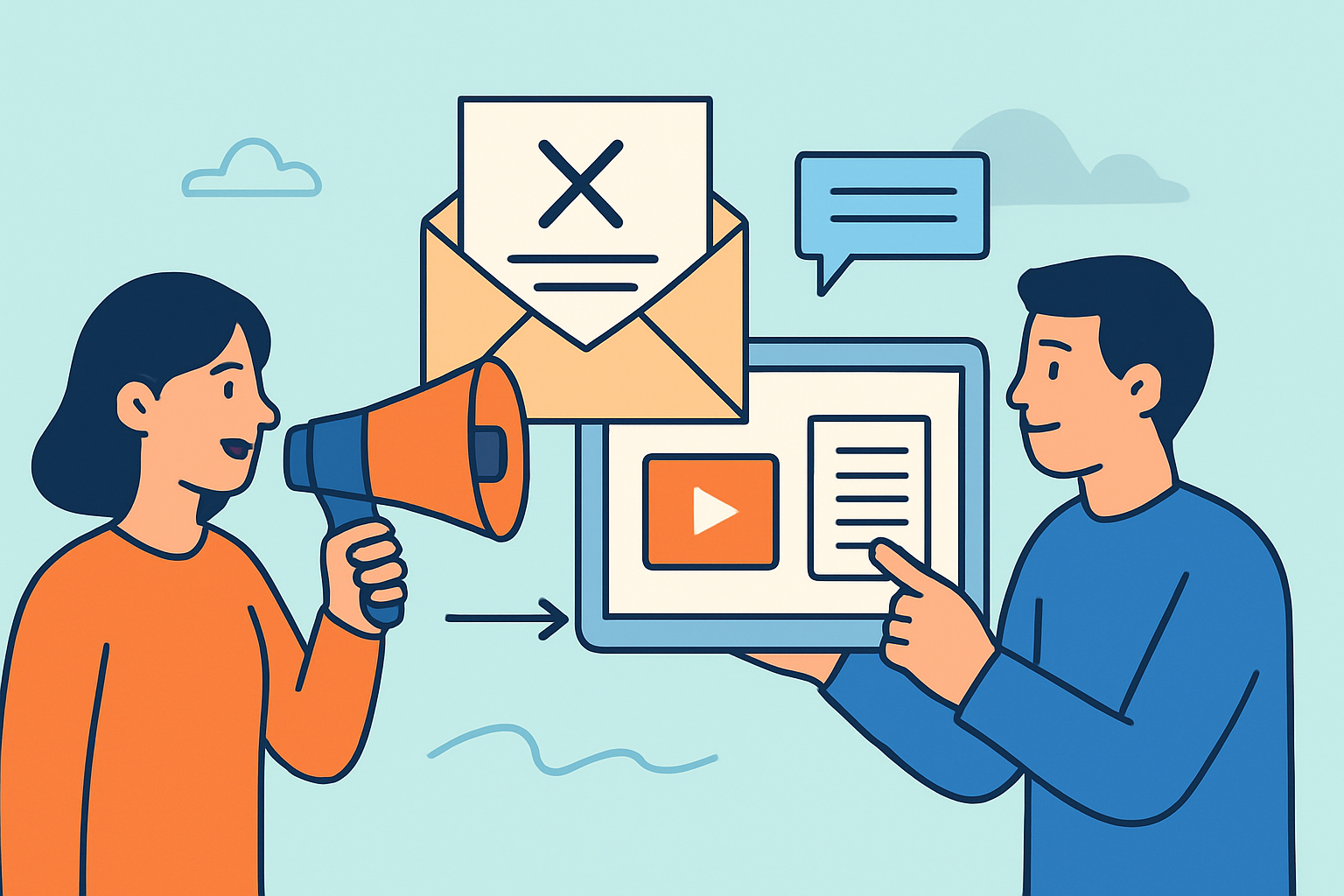
Most marketing teams pour 80% of their effort into creating content and maybe 20% into getting it seen – then wonder why traffic stays flat for months. Content distribution is the part of the process that actually determines whether an article, video, or post generates pipeline or just sits on page four of a sitemap nobody visits. This piece breaks down what a real distribution playbook looks like, why most companies get it backwards, and how to fix it without hiring an entire team.
Why Publishing Isn’t the Same as Distributing
A B2B software company might publish two blog posts a week for a year, hit 100 articles, and still see organic traffic under 500 visits a month. That’s not a content quality problem – it’s a distribution problem. Publishing is putting content on a URL. Distribution is making sure the right people actually encounter it, more than once, across more than one channel.
The mistake happens early: teams treat distribution as an afterthought, something you do for ten minutes after hitting publish – share on LinkedIn, maybe an email blast, done. Real distribution is planned before the content is even written, with a specific channel mix, timing, and repurposing plan attached to every piece.
The Myth That Great Content Distributes Itself
There’s a persistent belief that if content is genuinely useful, it will naturally get shared and ranked. It won’t. Search engines and social algorithms don’t reward quality in isolation – they reward engagement signals, and engagement signals require an audience to already exist. A brilliant article with zero initial traction rarely gets a second chance, because most platforms use early performance to decide how far to push something.
The content that wins is usually not the best-written piece – it’s the piece that got seen by the right 200 people in the first 48 hours, generated enough clicks and shares to trigger algorithmic amplification, and then kept collecting mentions and backlinks for months afterward. Distribution strategy creates that initial push. Nothing else does.
Building a Distribution Plan Before You Publish
A workable process looks like this:
1. Define one primary goal per piece. Is this article meant to rank for a keyword, warm up a cold email list, or support a sales conversation? Each goal changes which channels matter most.
2. Map three distribution tiers. Owned channels (email list, website, app notifications), earned channels (SEO, PR, backlinks, communities), and paid channels (retargeting, social ads, sponsored placements). Most companies only use tier one.
3. Schedule a 30-day distribution window. Content doesn’t die after the launch-day post. Space out LinkedIn posts, newsletter mentions, sales enablement use, and paid promotion across the following weeks instead of dumping it all on day one.
4. Repurpose before you move on. One long-form article can become a LinkedIn carousel, three social posts, an email snippet, and a short video script. This is usually the single biggest missed opportunity in a content calendar, and it’s covered in more depth in this breakdown of turning one article into ten pieces of content.
5. Track distribution metrics separately from content metrics. Word count and publish frequency say nothing about reach. Click-through rate on shares, referral traffic by channel, and assisted conversions in the CRM tell the real story.
Where Sales Teams Fit Into Distribution
Sales reps are one of the most underused distribution channels in most companies. A rep sharing a relevant article with a prospect mid-deal, or an SDR using a piece of content as a reason to reconnect after a stalled conversation, often outperforms a paid ad targeting the same audience – because it comes with context and a relationship attached.
This only works if content and sales operate off the same calendar. When marketing hands sales a list of “content assets by buyer stage” instead of a blog RSS feed, reps actually use it. Teams that connect content distribution to their outreach cadence tend to see meaningfully shorter sales cycles, simply because prospects receive relevant information at the moment they’re evaluating, not three months earlier when it was published.
Common Distribution Mistakes That Quietly Kill Reach
A few patterns show up again and again in accounts that struggle with distribution:
Posting once and never resurfacing evergreen content. An article that ranked well eighteen months ago can still convert – if it gets refreshed and reshared instead of forgotten.
Ignoring channel-specific formatting. A 2,000-word article pasted directly into a LinkedIn post performs worse than a 150-word summary with a link, because the platforms reward native, scannable content over walls of text.
No clear owner. When distribution is “everyone’s job,” it becomes no one’s job. Someone – even part-time – needs to own the calendar and follow through on the repurposing plan.
Measuring vanity metrics. Impressions and likes feel good but don’t indicate whether the content moved anyone toward a purchase decision. Referral traffic that converts and pipeline influenced by content are the numbers worth reporting on.
A Simple Distribution Timeline Example
For a single cornerstone article, a realistic 30-day distribution sequence might look like this: day 1, publish and send to the email list; day 2, LinkedIn post from the company page; day 4, personal LinkedIn posts from two team members with their own commentary; day 7, repurposed carousel or infographic; day 10, mention in a relevant online community or forum discussion; day 14, sales team shares with active prospects where relevant; day 21, short video clip posted to social; day 30, performance review and decision on whether to boost with paid promotion.
That single article, distributed this way, typically generates three to five times more total reach than the same piece published and shared once.
Frequently Asked Questions
How is content distribution different from content marketing?
Content marketing covers the entire process – strategy, creation, and distribution. Content distribution specifically refers to the channels and tactics used to get published content in front of an audience. A company can have strong content marketing and still fail at distribution if it only relies on organic search to surface new pieces.
How much of a marketing budget should go toward distribution versus creation?
There’s no universal ratio, but many teams that see strong content ROI spend close to as much time and budget on distribution as they do on creation – roughly a 50/50 split rather than the 80/20 split most teams default to.
Can distribution be automated?
Large parts of it can – scheduling social posts, triggering email sequences, and flagging content to sales at the right funnel stage are all things automation handles well. The strategic decisions – which channels matter for which audience, and how a piece should be repurposed – still need human judgment behind them.
Distribution is where most content strategies quietly fail, not because the content is bad, but because nobody built a repeatable system for getting it seen. Treat distribution as a planned process with its own timeline and metrics, not a five-minute afterthought, and existing content starts working a lot harder without writing a single new word.