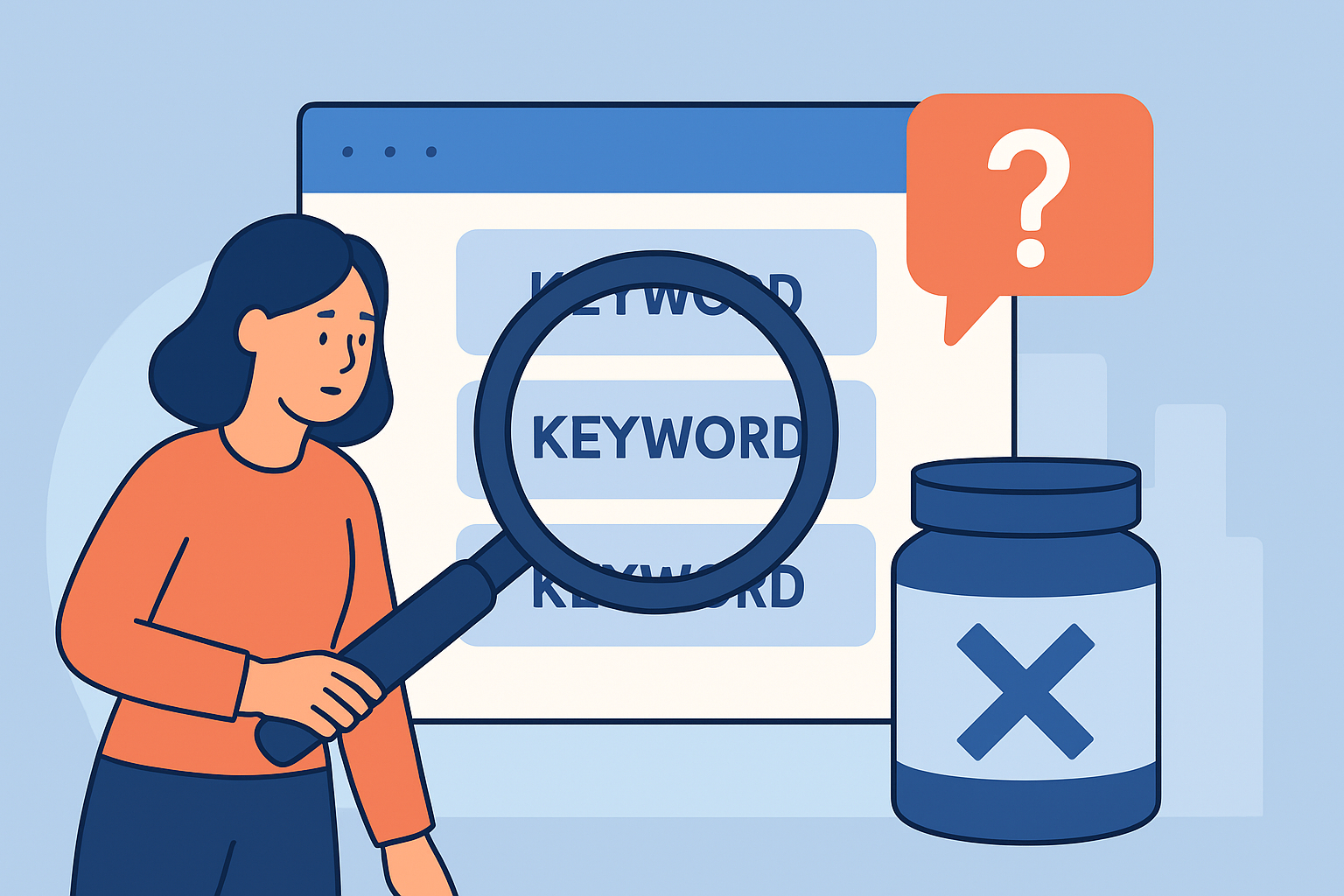
Keyword cannibalization sneaks up on teams that publish consistently, and by month twelve or eighteen of a content program it’s usually costing them rankings they’ve already paid to earn. This guide walks through how to diagnose it fast – in under an hour, using tools most teams already have – and what to do once you’ve confirmed it.
The term describes what happens when two or more pages on the same domain target the same or nearly the same search intent, and Google can’t decide which one deserves to rank. Instead of one page climbing steadily, both pages split signals – backlinks, clicks, internal links, topical relevance – and neither one performs as well as a single consolidated page would. It’s one of the most common technical debt problems in SEO content programs that scale past 100–150 published articles, and it’s rarely intentional. It happens because writers, freelancers, or AI tools cover the “same” topic from slightly different angles months apart, not realizing a page already exists.
How to tell if cannibalization is actually happening
The fastest diagnostic uses Google Search Console, not a paid tool. Open the Performance report, filter by query, and look for a query where impressions are split across two or more URLs with neither one holding a stable position. A classic pattern: Page A ranks position 8 one week, Page B ranks position 14 the same week for the identical query, and over a 90-day window the ranking URL swaps back and forth four or five times. That swapping – not just co-ranking – is the real tell. Two pages both ranking on page one for different sub-intents of a broad term isn’t cannibalization; it’s healthy topic coverage.
A second check: use the site search operator directly in Google – site:yourdomain.com “exact keyword phrase” in quotes. If three or four URLs surface for a specific, narrow phrase (not a broad head term), that’s a strong signal of overlap worth investigating further.
For teams with access to Ahrefs or Semrush, the Organic Keywords report can be filtered by “SERP features” or exported and pivoted in a spreadsheet to group by keyword, then counted by unique ranking URL. Any keyword with more than one URL ranking in the top 20 within the same country and device is a candidate. Semrush’s Position Tracking tool also has a built-in cannibalization flag as of its 2024 update, though it only checks tracked keywords, so it misses long-tail overlap unless you’ve added those terms manually.
The GSC filter method, step by step
An experienced technical SEO doesn’t start with a tool subscription – they start with the free data Google already gives them.
First, open GSC and set the date range to the last 90 days, not 28. Cannibalization often only shows up when you can see position volatility over a full quarter. Second, export the full Query data (not just the top 1,000 shown in the UI – use the API or a connector like Search Console Insights if the site has volume above that). Third, in a spreadsheet, pivot so each row is a query and each column shows the distinct ranking pages Google served for it, along with impressions per page. Fourth, sort by number of distinct URLs per query, descending. Fifth, manually review the top 20–30 rows – anything with three or more URLs and no clear intent difference between them is a real candidate, not a false positive.
That fifth step matters more than most people give it credit for. A tool can flag overlap; it can’t tell you whether “sales pipeline automation” and “sales pipeline automation software” are actually the same intent or whether one is informational and the other transactional. That judgment call is still human work, and skipping it is where a lot of “cannibalization fixes” go wrong – teams merge two pages that should have stayed separate because they served different stages of the buyer journey.
Common mistakes when diagnosing overlap
The most frequent mistake is treating any keyword overlap as cannibalization. If a blog post and a product page both mention “lead scoring,” that’s not a problem – that’s normal internal relevance. Real cannibalization requires both pages to be optimized for the same primary keyword with the same search intent, and to be visibly competing in the SERP position data.
The second mistake is diagnosing off a single day’s rank-tracker snapshot instead of a trend. Rankings fluctuate daily even without cannibalization – Google runs thousands of small algorithm tweaks a year, and a one-day swap between two of your URLs might just be noise. Look for a pattern that persists across at least four to six weeks before acting.
The third mistake, and the costliest one, is fixing cannibalization by deleting a page instead of consolidating and redirecting it. Deleting a URL that has accumulated backlinks and historical engagement throws away equity that a 301 redirect into the surviving page would have preserved. A page with 15 referring domains that gets deleted instead of redirected can set a domain’s authority back months.
What to actually do once you’ve confirmed it
Once two pages are confirmed to target the same intent, the fix is almost always consolidation: pick the stronger page – usually the one with more backlinks or better historical CTR, not necessarily the newer or longer one – merge the unique value from the weaker page into it, then 301 redirect the weaker URL. Update internal links that pointed to the redirected page so they point directly to the surviving one; leaving redirect chains in the internal link graph is a related and often overlooked mistake. Internal linking structure tends to be exactly where these conflicts get reinforced without anyone noticing, since new articles keep linking to whichever page ranked when they were written.
In cases where both pages genuinely serve different intents but still overlap on a shared keyword, differentiate them instead of merging – retarget one toward a more specific long-tail variant, adjust title tags and H1s so they’re unmistakably distinct, and make sure internal links point to each page using anchor text that matches its specific intent rather than the shared broad term.
One exception worth flagging: for sites with separate country or language subdomains (e.g., a .com and a .co.uk version), apparent “cannibalization” across those domains is usually a hreflang and geotargeting issue, not a content overlap issue, and needs a different fix entirely – checking hreflang implementation before touching the content itself.
FAQ
Does keyword cannibalization actually hurt rankings, or is it a myth?
It’s real, but overstated in most SEO content. Google’s John Mueller has said repeatedly that cannibalization is rarely a “penalty” – it’s a dilution effect. Two pages splitting relevance signals for the same intent will typically underperform what one consolidated page would achieve, but neither page gets actively punished.
How many pages need to overlap before it’s worth fixing?
If two pages are swapping ranking positions for the same query over a 90-day window with no clear intent difference, it’s worth fixing regardless of traffic volume, because the fix is usually low-effort (a redirect) relative to the ranking recovery it produces.
Can AI-generated content increase cannibalization risk?
Yes, specifically when large content volumes are produced without a shared keyword map. Teams publishing 20–30 AI-assisted articles a month are more exposed unless there’s a step that checks new topics against existing published URLs before drafting begins.
Run the GSC 90-day query export once a quarter, even on healthy sites – cannibalization creeps in gradually as content volume grows, and catching it early is a redirect; catching it late is a content audit that eats a week.