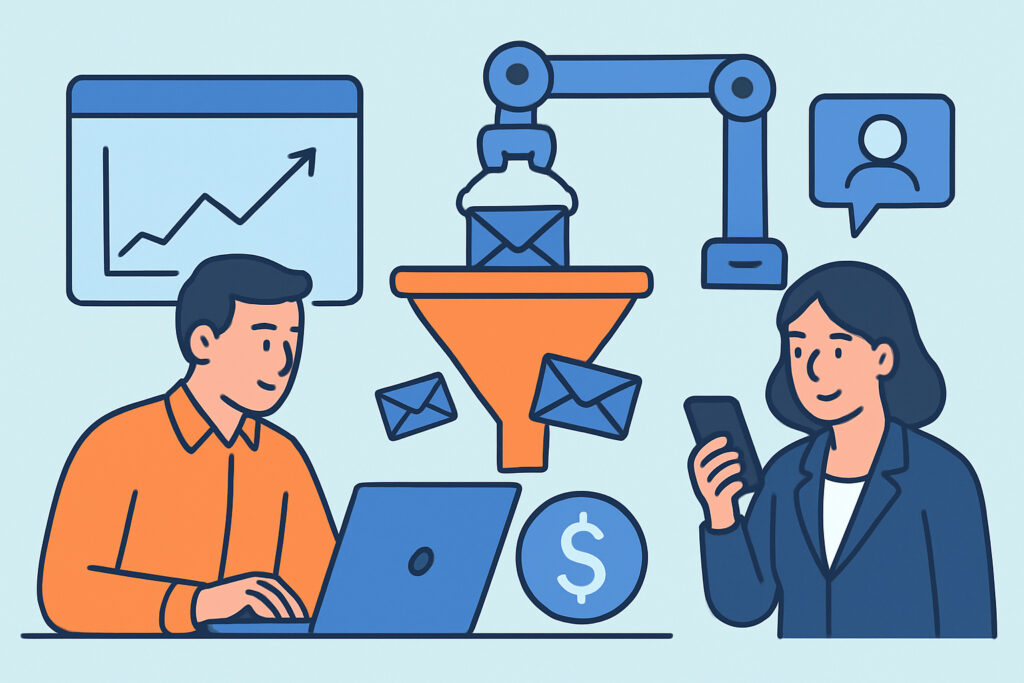
Most sales teams spend 80% of their time on manual outreach tasks that could run automatically while they sleep. Building an automated outbound sales funnel transforms repetitive prospecting into a systematic process that generates qualified leads consistently without constant human intervention.
Sales automation isn’t about replacing human connection – it’s about eliminating the grunt work so your team can focus on closing deals. The right automated system handles lead identification, initial outreach, follow-up sequences, and qualification scoring while maintaining the personal touch that converts prospects.
Why Traditional Outbound Sales Fails to Scale
The biggest mistake most sales teams make is treating automation like a magic button. They assume they can upload a contact list, write one generic email, and watch the deals roll in. This approach fails because it ignores the fundamental principle of outbound success: relevance at scale.
Manual outbound processes break down when volume increases. A sales rep can personally research and contact maybe 20-30 prospects per day effectively. Beyond that, quality drops dramatically. Messages become generic, follow-up timing becomes inconsistent, and promising leads slip through cracks.
The real problem isn’t capacity – it’s consistency. Human sales reps have good days and bad days. They forget to follow up, miss optimal send times, and struggle to maintain message quality across hundreds of touchpoints. Automation solves the consistency problem while amplifying what humans do best: building relationships and closing deals.
The Complete Outbound Sales Funnel Framework
A properly automated outbound funnel has five distinct stages, each with specific triggers and outcomes. Most teams try to automate everything at once and create a mess. The smart approach builds automation layer by layer.
Stage 1: Prospect Identification and Enrichment
Your system continuously identifies new prospects based on predefined criteria – company size, recent funding, technology stack, hiring patterns, or behavioral signals. The automation enriches each lead with contact information, social profiles, recent news, and engagement history before any human touches the record.
Stage 2: Initial Outreach Sequence
Multi-channel touchpoints across email, LinkedIn, and phone calls deliver personalized messages based on prospect attributes. The key is dynamic personalization – not just inserting a company name, but referencing specific triggers that made this prospect worth contacting.
Stage 3: Response Handling and Qualification
Automated systems categorize responses (interested, not interested, out of office, wrong contact) and route appropriately. Interested prospects get scheduled into calendars automatically. Objections trigger specific nurture sequences. Wrong contacts trigger research for better alternatives.
Stage 4: Meeting Preparation and Follow-up
Before each scheduled call, the system compiles a prospect research brief and sends it to the assigned sales rep. After meetings, automated sequences handle proposal delivery, follow-up scheduling, and stakeholder introduction requests based on meeting outcomes.
Stage 5: Deal Progression and Nurturing
Prospects who aren’t ready to buy enter long-term nurture sequences that deliver valuable content and maintain engagement over months. The system monitors engagement signals and re-engages prospects when timing improves.
Essential Technology Stack Components
Building effective outbound automation requires integrating multiple tools that work together seamlessly. The technology choices matter less than ensuring clean data flow between systems.
Your CRM serves as the central hub, but it needs help. A data enrichment service like ZoomInfo or Apollo provides contact information and company intelligence. Email automation platforms like Outreach or SalesLoft handle sequence delivery and response tracking.
Social selling automation through LinkedIn Sales Navigator or similar tools adds another touchpoint channel. Phone automation systems can handle voicemail drops and call scheduling. The key is ensuring all tools share data bidirectionally – when a prospect responds via LinkedIn, your email sequences should pause automatically.
Many teams underestimate the importance of a robust CRM workflow automation system. Without proper workflow management, even the best outreach tools become disconnected activities rather than a cohesive funnel.
Step-by-Step Implementation Process
Start with your Ideal Customer Profile (ICP) definition. Generic targeting kills automation effectiveness faster than anything else. Define specific attributes: company size, industry, technology stack, recent events, and behavioral signals that indicate buying intent.
Build your prospect database gradually. Import an initial list of 500-1000 highly targeted prospects rather than 10,000 random contacts. Quality beats quantity every time in outbound automation. Test your sequences on smaller segments before scaling up.
Create your message templates with dynamic personalization tokens. Write 3-4 variations of each message to avoid spam filters and provide variety. Include specific value propositions relevant to different prospect segments. Avoid obvious template language – personalized messages should feel individually crafted.
Set up your sequence timing carefully. Most teams send follow-ups too frequently and burn out prospects quickly. A typical effective sequence might be: initial email, wait 4 days, LinkedIn connection, wait 3 days, phone call, wait 1 week, follow-up email, wait 2 weeks, value-add email with relevant content, wait 1 month, final breakup email.
Configure response routing and lead scoring. Positive responses should immediately pause sequences and alert the assigned sales rep. Neutral responses continue nurturing. Negative responses stop all outreach but remain in the database for future campaigns when circumstances change.
Common Mistakes That Kill Results
The biggest myth in outbound automation is that more touches always equal better results. This leads to over-communication that annoys prospects and damages brand reputation. Quality and timing matter more than frequency.
Another critical mistake is treating all prospects identically. A startup founder responds differently than an enterprise procurement manager. Your automation should reflect these differences in messaging, timing, and channel preference.
Many teams also neglect list hygiene. Bounced emails, unsubscribe requests, and closed deals need immediate attention. Continuing to contact unqualified or uninterested prospects wastes resources and can trigger spam complaints that affect deliverability for your entire program.
Poor handoff processes between automation and human sales reps create friction exactly when momentum matters most. When a prospect shows interest, the response should be immediate and personal. Automated scheduling tools help, but someone needs to monitor inbound responses continuously.
Measuring and Optimizing Performance
Track metrics that matter for business outcomes, not just activity levels. Open rates and click rates provide some insight, but response rates, meeting booking rates, and pipeline contribution tell the real story.
Monitor deliverability metrics closely. If your emails aren’t reaching inboxes, perfect messaging won’t help. Track spam complaints, bounce rates, and unsubscribe rates. High numbers in any category indicate problems with targeting, messaging, or frequency.
A/B test systematically but focus on elements that impact results significantly. Subject lines, send times, message length, and personalization approaches all deserve testing. Change one variable at a time and test with statistically significant sample sizes.
Most successful teams see 2-5% response rates from cold outbound campaigns. Meeting booking rates typically range from 0.5-2% of total prospects contacted. If your numbers fall below these ranges, examine targeting quality before adjusting messaging or frequency.
Scaling Without Losing Quality
Quality control becomes critical as volume increases. Implement approval workflows for new message templates and targeting criteria. Regular audits of prospect data quality prevent garbage-in, garbage-out scenarios.
Build feedback loops between sales reps and marketing teams managing automation. Reps know which messages resonate during actual conversations. This intelligence should inform automation messaging and targeting refinements.
Consider vertical-specific automation tracks as you scale. Different industries respond to different messaging approaches, timing preferences, and communication channels. Healthcare prospects behave differently than technology prospects. Your automation should reflect these differences.
Frequently Asked Questions
How long does it take to see results from outbound automation?
Most automated outbound campaigns start generating qualified meetings within 2-3 weeks of launch. However, building a sustainable pipeline typically requires 6-8 weeks as longer nurture sequences begin converting prospects. The key is consistent daily activity rather than sporadic large campaigns.
What’s a realistic budget for outbound sales automation tools?
Essential automation tools typically cost $200-500 per sales rep per month, including CRM, email automation, data enrichment, and social selling tools. This investment usually pays for itself if automation generates just one additional qualified meeting per month per rep.
How do you avoid spam filters with automated outreach?
Maintain clean sender reputation through proper list hygiene, gradual volume increases, and personalized messaging. Avoid spam trigger words, use proper email authentication (SPF, DKIM, DMARC), and monitor deliverability metrics closely. Most importantly, only contact prospects who match your ideal customer profile – relevance is the best spam prevention.
Building Your Automation Foundation
Successful outbound automation starts with clear processes, quality data, and realistic expectations. Focus on building one component at a time rather than attempting full automation immediately. The teams that succeed treat automation as amplification of good sales fundamentals, not a replacement for strategy and relationship building.
The most effective automated funnels feel personal to prospects while running efficiently at scale. This balance requires continuous optimization based on real performance data and prospect feedback. Start small, measure everything, and scale what works while eliminating what doesn’t.